Greek wildfire evacuations surge as hundreds flee via sea
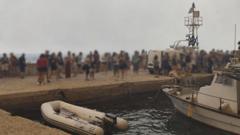
Mass Evacuation Underway in Greek Coastal Region
An unprecedented Greek wildfire evacuation operation has unfolded as emergency services mobilized maritime resources to rescue more than 500 individuals stranded in affected areas. The situation represents one of the most significant coastal rescue missions in recent European wildfire history, with authorities deploying multiple vessels to ensure safe passage away from advancing flames.
Details of the Agios Vasileios Rescue Operation
The seaside community of Agios Vasileios became the focal point of emergency response efforts when residents and visitors found themselves cut off by rapidly spreading flames. Maritime authorities orchestrated a coordinated evacuation strategy, utilizing available boat capacity to transport evacuees to safer locations along the Greek coastline. The majority of those rescued consisted of holiday visitors who were holidaying in the region when the wildfire situation deteriorated unexpectedly.
Rescue teams worked methodically to identify and locate all individuals requiring assistance, ensuring that vulnerable populations, including elderly residents and families with young children, received priority boarding on evacuation vessels. The operation demonstrated effective coordination between local authorities, coast guard personnel, and volunteer rescue organizations mobilized to respond to the crisis.
Broader European Wildfire Crisis
The Greek wildfire represents part of a larger pattern of fire-related disasters affecting multiple European nations simultaneously. Across the continent, fire management agencies report heightened alert levels as unusually hot temperatures and dry conditions create ideal circumstances for rapid fire propagation. Several countries have implemented emergency protocols and activated mutual aid agreements to share firefighting resources and expertise.
Response and Emergency Services
Local emergency management personnel coordinated the evacuation with precision, establishing collection points where evacuees could gather before boarding vessels. Coast guard ships and civilian fishing boats were commandeered to maximize evacuation capacity within the shortest timeframe possible. Communication networks functioned effectively to maintain real-time updates regarding evacuation status and identify additional people requiring rescue assistance.
Medical teams positioned at receiving ports assessed evacuees for heat-related injuries, dehydration, and smoke inhalation, providing immediate care as necessary. Support services including accommodation, food distribution, and psychological counseling were mobilized to assist displaced individuals in the immediate aftermath of their evacuation.
Environmental and Climatic Factors
Meteorologists attribute the severity of these wildfire conditions to exceptional heat waves sweeping across Southern Europe, combined with prolonged drought periods that have depleted moisture levels in vegetation. These environmental factors have created particularly dangerous fire conditions where blazes spread with remarkable velocity and intensity. Climate analysts warn that such extreme weather patterns may become increasingly frequent in coming decades.
International Support and Coordination
The European Union activated its Civil Protection Mechanism to facilitate cross-border assistance, enabling countries to request and receive additional firefighting aircraft, personnel, and equipment. This coordinated response reflects growing recognition that wildfire management requires international cooperation given the scale of contemporary fire-related disasters affecting the continent.
Ongoing Safety Concerns
Even as evacuation operations concluded successfully, authorities maintained heightened vigilance regarding additional fire outbreaks in surrounding regions. Preventive measures including controlled burns, vegetation management, and enhanced monitoring systems have been intensified to reduce future wildfire risks in vulnerable communities throughout Southern Europe.